
The importance of colour psychology in learning

Increasingly, schools and colleges must balance the need to be robust and functional with the need to be inspiring, nurturing spaces that can support students emotionally, and help address complex behavioural needs2. The best modern school design aims to create learning environments where students can thrive, and a conducive colour scheme that encourages mental sustainability is a key ingredient.
Colour can have a profound effect on students’ performance and wellbeing in learning environments. Research suggests that schools or colleges should prioritise design and colour that light up the senses to inspire students and keep them motivated. Bright colours can transform a classroom into a dynamic learning hub3, and there is evidence that spaces stimulating the imagination can significantly improve a child’s ability to explore, learn and grow2.
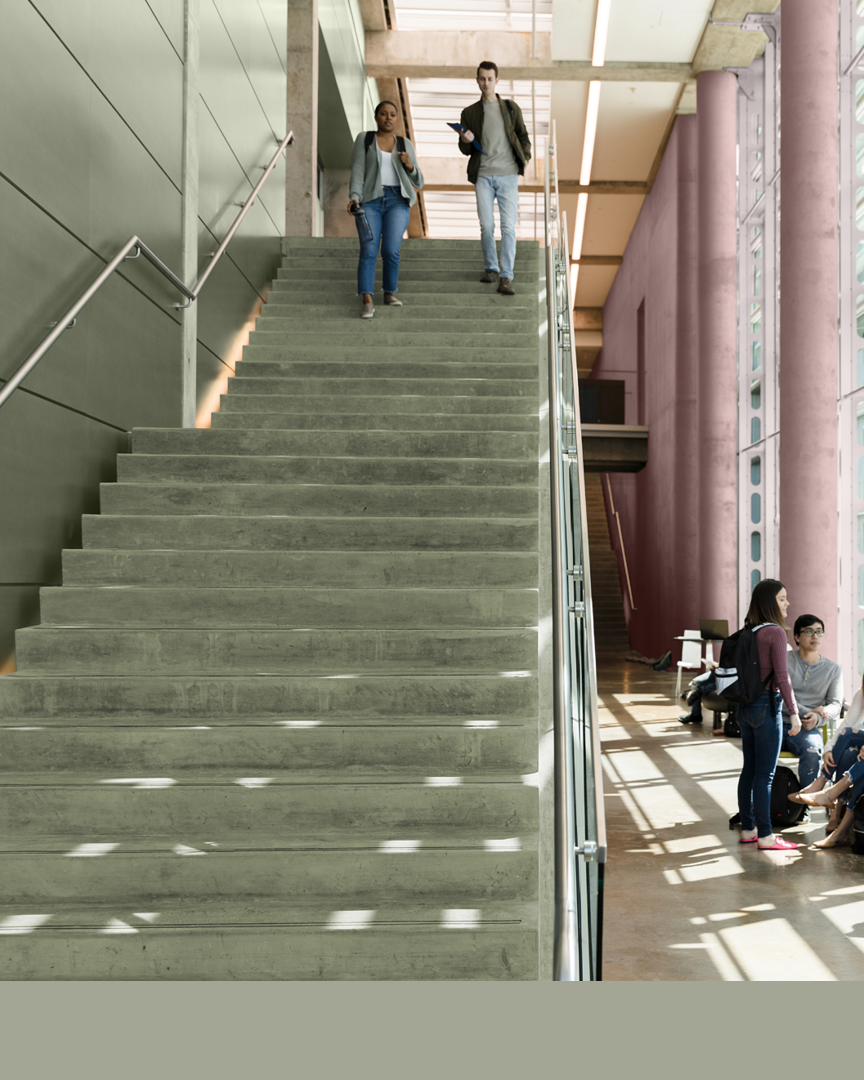
Strategic use of colour also enhances wayfinding and orientation – a crucial factor in any educational environment and especially key for neurodiverse students.
How healing green and bright colours can energise school spaces
- Design: How Education Architecture Reflects Changing Views on Childhood, Architizer, September 2024
- Human Centric Design 2.0, AkzoNobel
- How Schools Should Be: Holistic Classroom Designs that Promote Joy and Confidence, EDSpaces, October 2024
Using upbeat colours for wayfinding
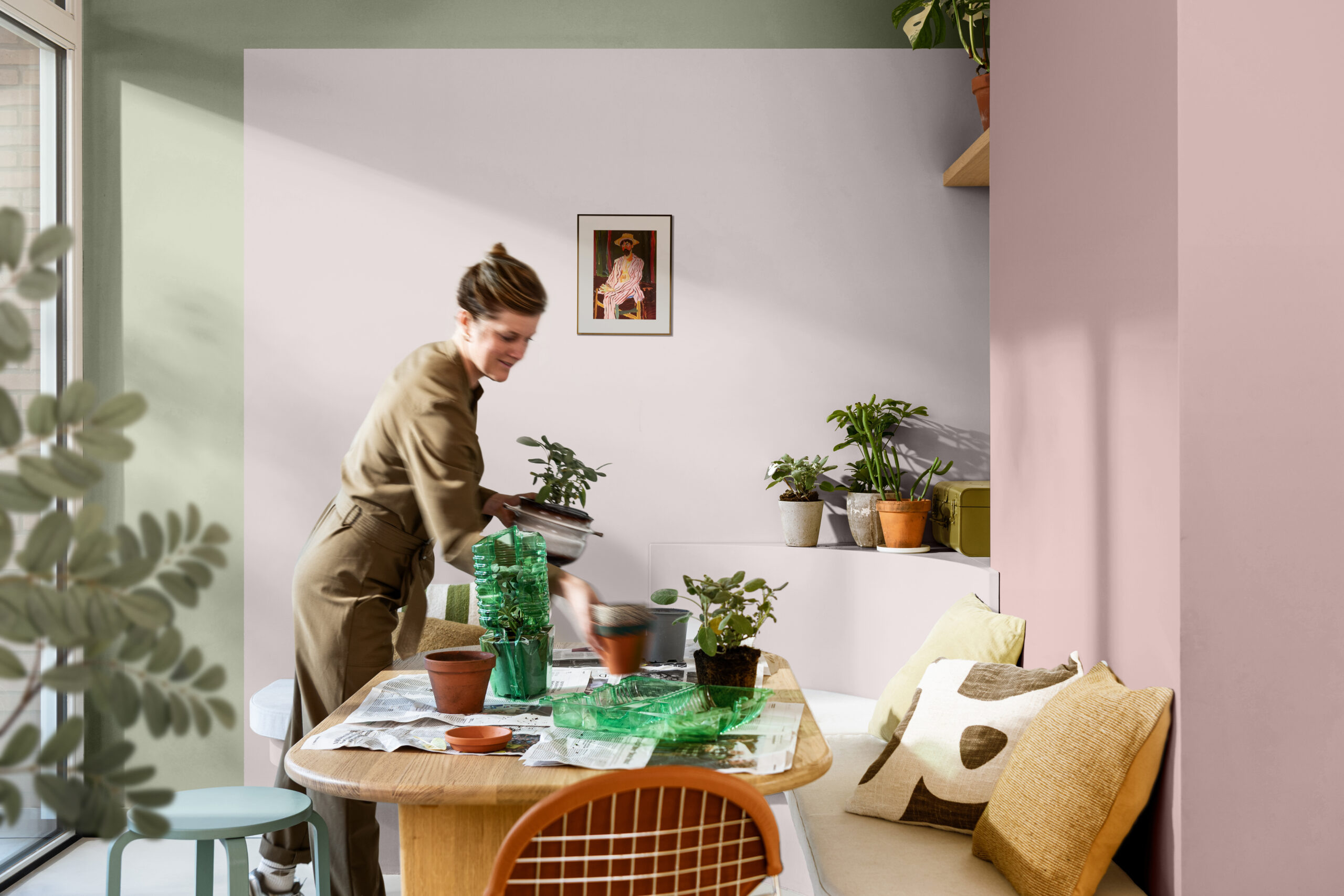
Transforming a classroom with a clever colour scheme
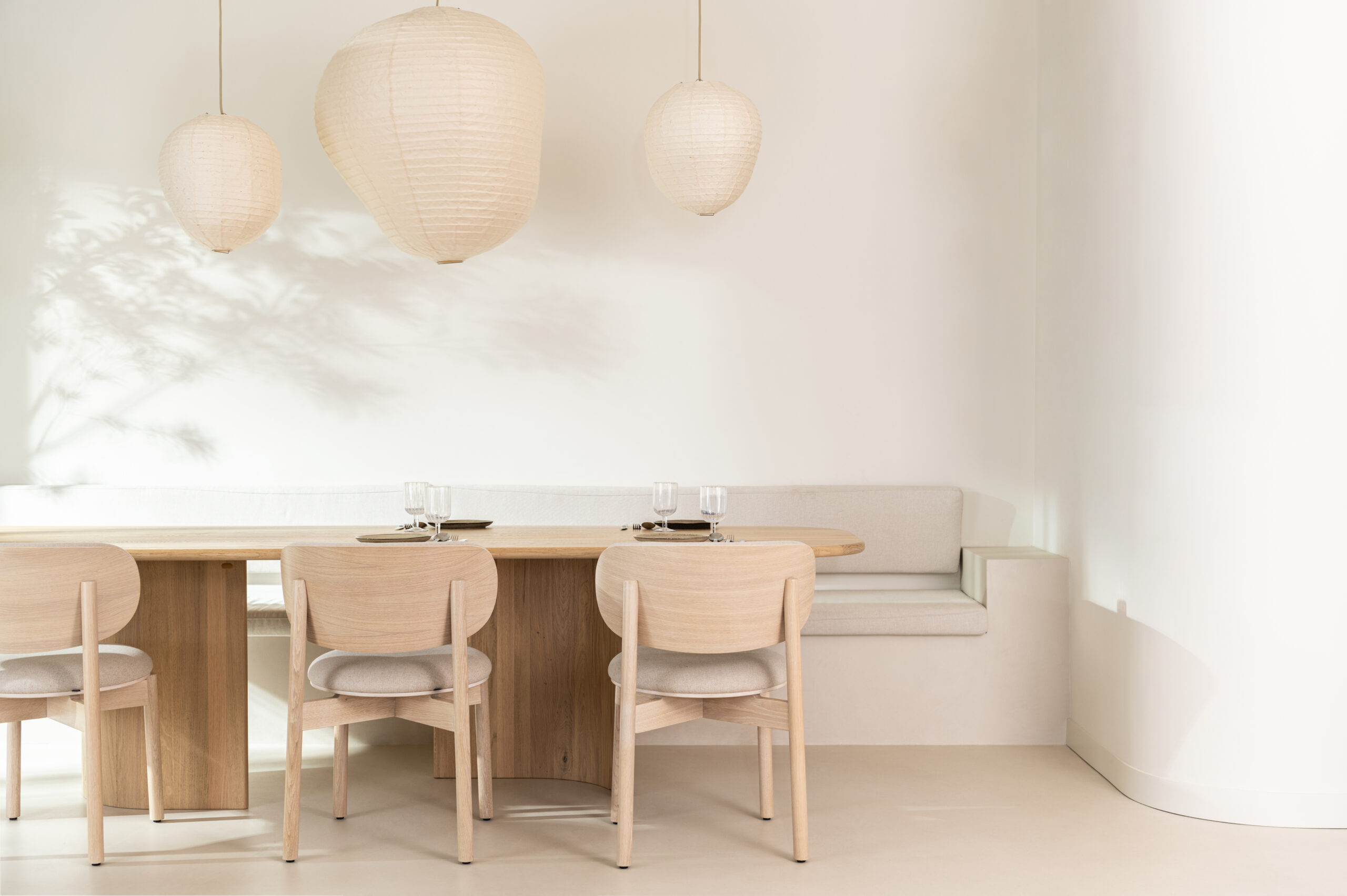
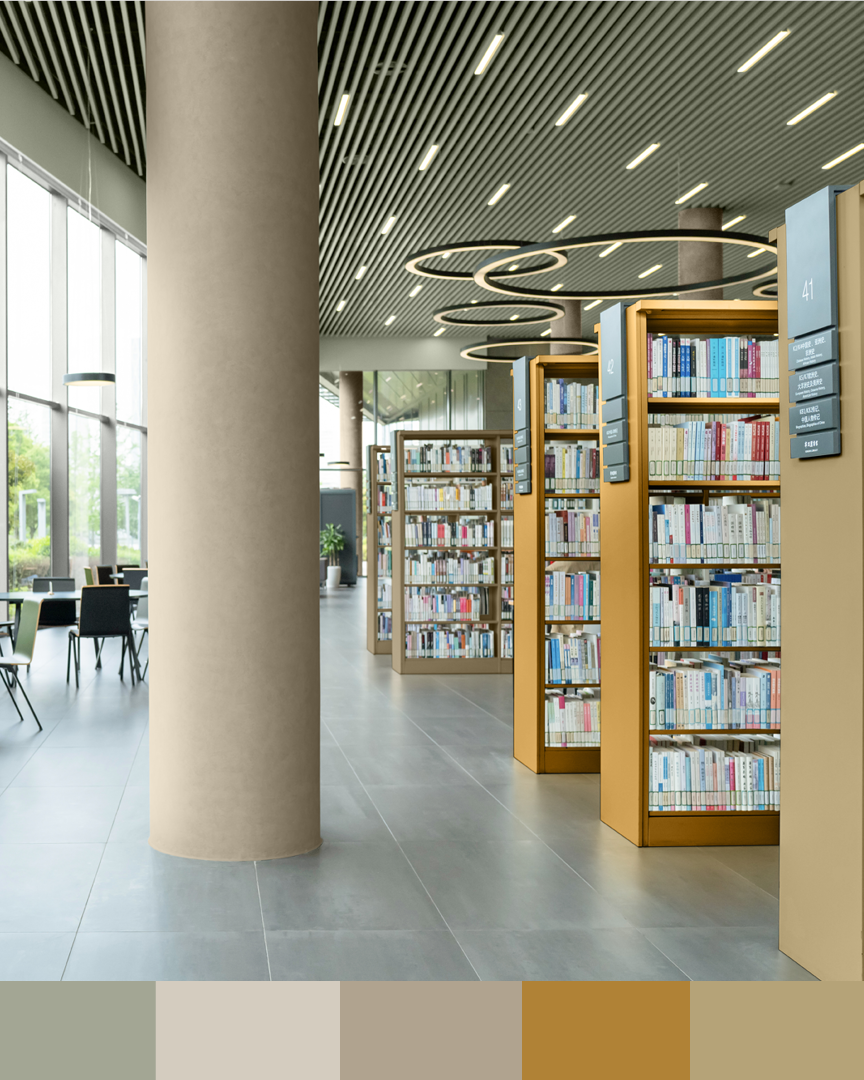
Combining light, uplifting colours for an inspiring library
Giving personality to a college exterior
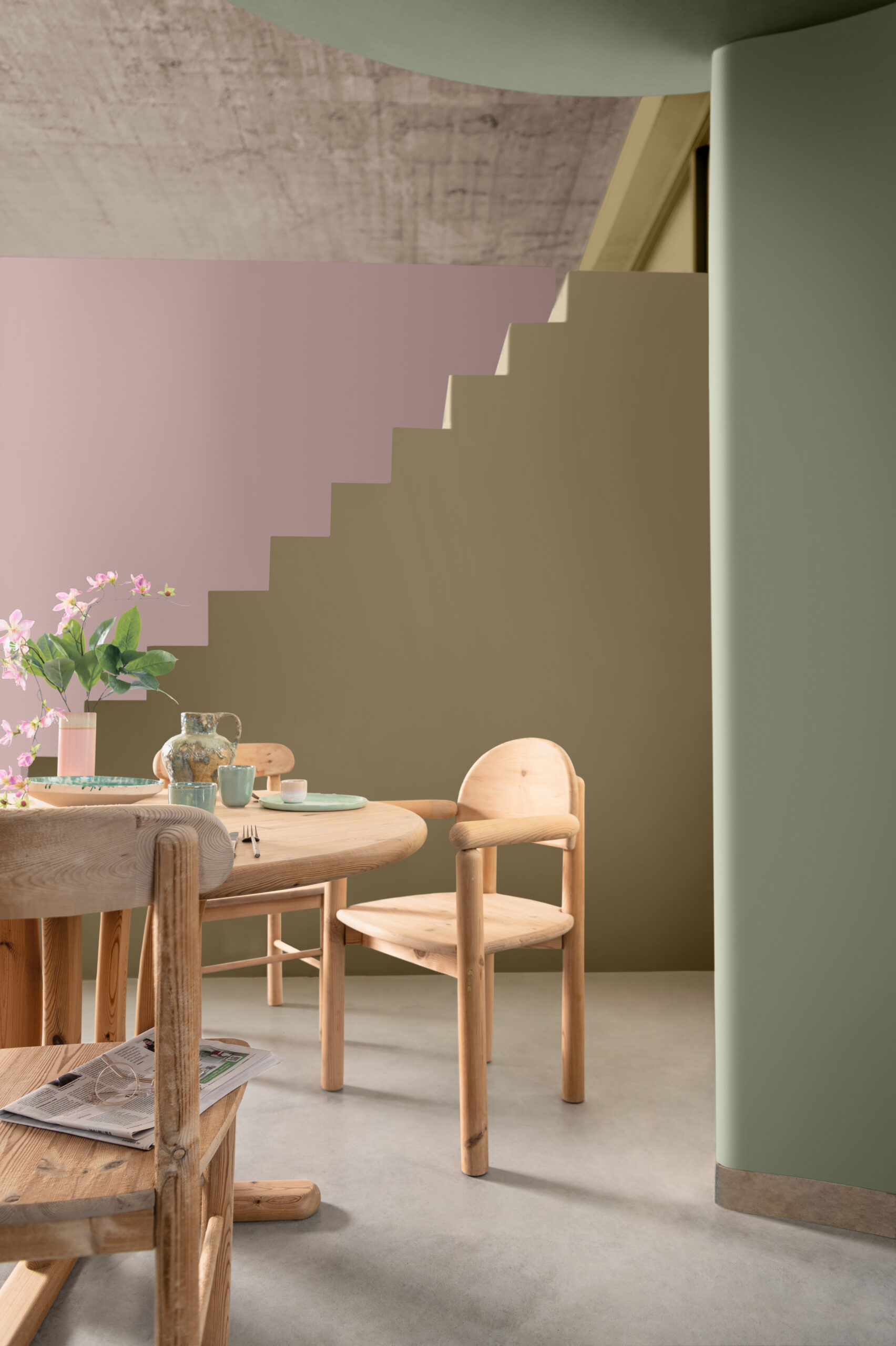
Mauvilac Colour of the Year 2027 in more detail
Explore Colour Applications Across Sectors
Find out how Mauvilac Colour of the Year and 2027 colour stories can also transform education spaces, office environments and healthcare facilities .